

VHF RADIO
VHF stands for Very High Frequency, which is a part of the radio frequency spectrum. Specifically, it refers to radio waves with a frequency between 30 and 300 MHz. VHF radio is commonly used for various applications, including marine communication, aviation, and two-way radio systems.
Here's a more detailed breakdown:
Frequency Range: VHF waves fall between 30 and 300 megahertz (MHz).
Applications:
Marine Radio: VHF is the standard for communication on the water, used for contacting harbors, marinas, and other vessels.
Aviation: VHF is the primary means of communication between aircraft and air traffic control, as well as for communication within aircraft.
Two-Way Radio: VHF is used in handheld radios for short-range communication in various settings, such as construction sites or outdoor events.
Line of Sight: VHF signals generally travel in a straight line, meaning they are affected by obstructions like buildings or terrain.
Advantages: VHF offers good signal clarity and range, especially in open areas.
Disadvantages: Signal interference can occur when multiple devices are transmitting on the same frequency.
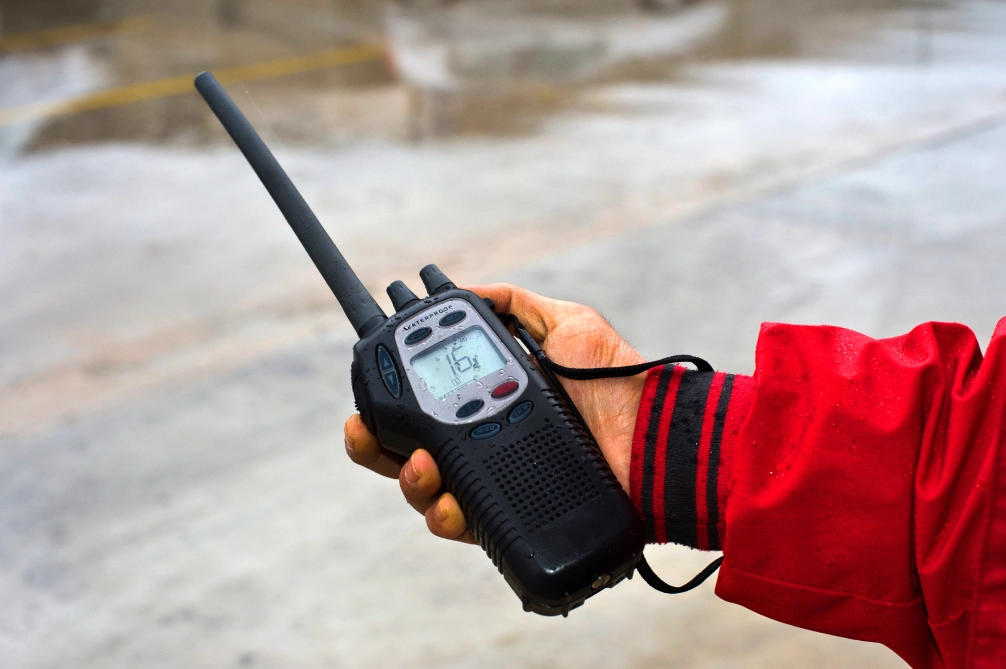
VHF radio calls for emergencies use Channel 16 to declare "Mayday" (grave danger), "Pan-Pan" (urgent), or "Securité" (safety). Procedures require stating the distress signal three times, vessel name/call sign/MMSI, position, and nature of emergency. For routine calls, identify the target vessel three times, your vessel three times, and switch to a working channel.
Key VHF Radio Procedures
- Emergency (Mayday): Used for "grave and imminent danger".
- Channel: 16 (High Power).
- Phrase: "MAYDAY, MAYDAY, MAYDAY".
- Identify: "This is [Vessel Name] 3 times".
- Details: Position, nature of distress, number of people on board.
- End: Say "Over".
- Urgency (Pan-Pan): Used for urgent information (e.g., man overboard, mechanical failure).
- Phrase: "PAN-PAN, PAN-PAN, PAN-PAN".
- Safety (Securité): Used for navigation safety (e.g., weather, floating hazards).
- Phrase: "SECURITÉ, SECURITÉ, SECURITÉ".
- Routine Calls:
- Call vessel/station name 3 times.
- "This is [Your Boat Name] 3 times".
- Switch to a working channel (e.g., 08, 72, 77) upon agreement.
Tips for Effective Communication
Keep Channel 16 Clear
Only for distress and initial contact.
Microphone Technique
Speak across the microphone, not directly into it, to reduce noise.
Listen First
Ensure the channel is not in use before transmitting.
Use DSC
If equipped, use the Digital Selective Calling (red button) for faster alerts.